About Fawley
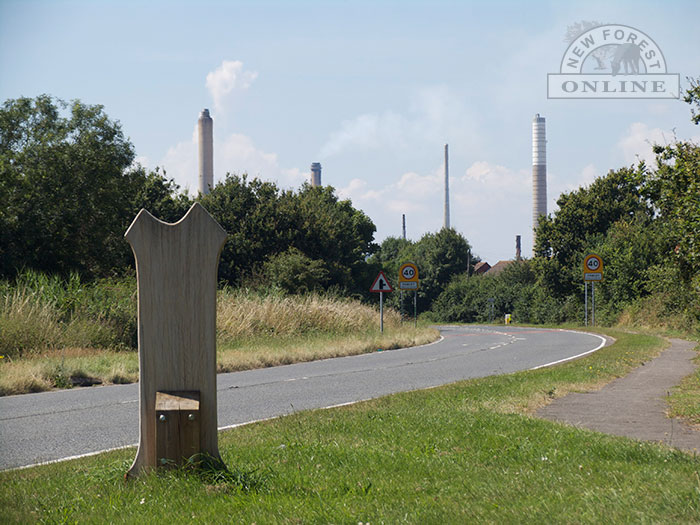
Fawley stands at the very Eastern edge of the New Forest, almost on Southampton Water. The Parish has Bronze Age barrows, Roman remains and the old Roman road at Holbury and Stone Point, which was the landing point of the Saxons when they came from the Isle of Wight. It is perhaps best known for the large Fawley power station and refinery which dominate the landscape.
Things to Do and See in Fawley
- Fawley Circular Walk 1: [see map]
Distance: 1.5 km / 1 mile
Duration: 20 minutes
Starting Point: Church lane, Fawley
Condition: Good, mostly pavements/tarmac, unsurfaced paths may become muddy after heavy rain
- Fawley Village is home to Fawley Squash Club, with 2 squash courts, 2 halls and a small meeting room. Information about attractions and places to visit in and around the area, including Beaulieu, Exbury Gardens and Eling Tide Mill, as well as bus and train time-tables are available at reception.
- Jubilee Hall is a thriving centre for both young and old alike. There is a regular playgroup which meets every morning during term time. An after-school club is operated from the hall.
A Little Fawley History
A settlement has existed at Fawley for many centuries, and the village itself was recorded in the Doomsday Book. Other areas in the parish can boast remains from the stone age, and Roman occupation.
All Saints Church, the oldest building in the area built in the 12th century and extended over the centuries, but has records of church activity in the Parish dating back to 971A.D. In ‘The Square’ at Fawley there are buildings dating back to 1793, and Jubilee Hall was built in 1887 by public subscription to mark Queen Victoria’s Golden Jubilee.
The arrival of the Esso oil refinery in 1921 transformed a sparsely populated agricultural area into an industrial centre with a population of around 14,500. Modern Fawley is smaller and less populous than its more recently founded neighbours, but remains the administrative centre of the parish. The Parish has Bronze Age barrows, Roman remains and the old Roman road at Holbury and Stone Point, which was the landing point of the Saxons when they came from the Isle of Wight.
The stone Norman church, All Saints’ in Fawley Village, contains a replica of a “long boat” used by the inhabitants from Tristan da Cunha, which they presented to the locality as a token of their gratitude for their reception when their island was partially destroyed by a volcano.
The stone Norman church, All Saints Church Fawley, is the oldest building in the area built in the 12th century and extended over the centuries, but has records of church activity in the Parish dating back to 971A.D.
In ‘The Square’ at Fawley there are buildings dating back to 1793, and Jubilee Hall was built in 1887 by public subscription to mark Queen Victoria’s Golden Jubilee.